Thursday, October 31, 2013
Patently Broken
The current state of the US patent system is partially, if not completely, broken when it comes to software. The USPTO issues thousands of patents covering computers, software, and other related technologies each year. Patent claims are often so broad that they overlap with numerous previous patents. In an edition of the podcast This American Life an analysis of one particular patent yielded over five thousand patents issued around the same time or earlier that covered pretty much the exact same thing. Patents are supposed to be novel. They are supposed to promote the progress of science and the useful arts. With the USPTO issuing so many patents that cover the same thing, it's obvious that the process, at least for software, is broken. We need software patent reform. Congress should follow the trail blazed earlier this year by New Zealand, and abolish software patents.

Thursday, October 17, 2013
Computer Security vs the World
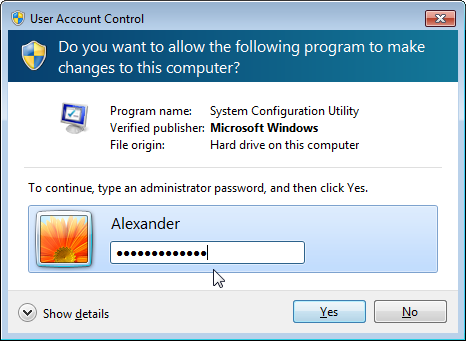 |
| Figure 1 - Windows Vista User Account Control Prompt |
In The Cuckoo's Egg, Clifford Stoll recounts the tale of how he discovered and tracked a computer hacker through his system back in the early days of interconnected computers. Many of the security holes the hacker used were there because System Administrators had not secured their systems correctly. They left default accounts active, or used software with bugs that created security loopholes. Often the reason for the security blunders was to make access for legitimate users more convenient. Unfortunately this also had the side effect of unlocking the door for intruders as well.
So what can be done? Where is the balance between usability and security to be found? A Google search for security vs usability gives 1,730,000 results, none of them giving a real definitive answer. People are thinking about it though, so at least we're moving in the right direction.
Tuesday, October 8, 2013
More than a Bird's Eye View
There are now autonomous drone aircraft that can stay aloft for nearly five years at a go. That's 43,680 flight hours at a time. Amazing. By the time the aircraft is ready to make it's first landing it will probably have been obsolete for at least three years already. And if we've got drones that can keep an eye on someone for five years straight we know that some government agency has plans for it. Aside from the creepier uses however, I can imagine quite a few different scenarios where a drone flying continuously at 65,000 feet would be quite useful. Search and rescue operations, live map data, mobile satellite links, GPS-supplementing systems for mountainous regions--and more. I want to see one of these in action. Or at least a video feed being streamed from 65,000 feet up. And I think soon we'll be seeing drone aircraft that can stay aloft indefinitely--we'll just set them adrift on the atmosphere, like leaves floating on the surface of a pond, and they'll send back everything they can see below the surface.
Sunday, October 6, 2013
Can you keep up with #ldsconf?
I followed tweets of #ldsconf on Twitter during the last session of General Conference to see if it would enhance my conference experience. It may have been the method I was using, but I felt extremely distracted from the actual talks being given while trying to read what people were tweeting about them. The site I was using to follow the tweets allowed me to control the feed speed, but I found that if I slowed it down too much, the queue of tweets waiting to be displayed would grow quickly, and soon there would be thousands of tweets waiting to be read. Then, if I clicked the button to display everything and bring me up to current I wouldn't have the time to go and read the tweets that I just displayed. I finally put the speed up as fast as it would go, and just decided to skim the tweets. This didn't actually empty the queue, it just kept it from filling up too fast. Using twitter as a tool to enhance my conference viewing experience was a failure I think. It was amusing, however, to see people tweeting about the fly that kept bothering the speakers. Where I do think it would be useful is in analyzing what resonated with people after the fact, to see what people were excited about. That kind of analysis could be useful to the general authorities who gave the talks in gauging whether their message got across in the way they intended, or not.
Thursday, October 3, 2013
Family History--now with achievements!
Some of my earliest memories of visiting my paternal Grandparent's involve watching them boot up their MS-DOS PC, load up PAF (Personal Ancestral File), and do "family history." I would stare at the bright blue screen, fascinated that contained on a number of tiny 3.5" disks were thousands of names of my ancestors and relatives, stretching back to who knew how far. Some of them even had stories attached to their names, which I enjoyed reading. It was amazing to me that we had such easy access to all of that information. Genealogy, or family history research is so much easier today, than it was when I was a child, and that was leaps ahead of when my parents were kids. But it seems that people my age (including myself) have little interest in doing the work to find out about their heritage, or believe that their parents and grandparents have already done it all. It's so simple, though. Just now I logged in to Family Search and while I was able to trace my ancestors back 11 generations to find Peder Jensen (who died sometime in the 1600s) in seconds, there was a lot of missing information, or incomplete branches. We need a motivator for my generation to pick up the torch. I wonder if adding achievements for filling in holes in your family tree would help boost interest? There could be achievements for how bushy you've made your tree, and for reaching certain milestones for how many generations back you've traced personally. You could post your achievements to Facebook, or Google+ to show your friends how much further you've traced your tree. Adding game elements like that could work. Somebody get on that.
Note: While PAF is no longer available for download, you can use Family Search online, and other software products such as AncestralQuest, Legacy Family Tree, or RootsMagic have picked up the PAF torch.
Note: While PAF is no longer available for download, you can use Family Search online, and other software products such as AncestralQuest, Legacy Family Tree, or RootsMagic have picked up the PAF torch.
Tuesday, October 1, 2013
I'll have the 큰 페퍼로니 피자
Imagine being able to walk into a restaurant anywhere in the world, pick up the menu and place your order, all while not being able to understand the language, but still comprehending what you will be eating. NTT Docomo, a Japanese technology company, is working on a wearable computer similar to Google Glass that will let you do this, and more. It's reminiscent of the babelfish of Hitchhiker's Guide to the Galaxy fame--though not quite up to that standard, yet. Devices that can translate text on the fly will be incredibly useful. WHO representatives, students studying abroad, international businessmen, historians, electronic device repairmen--anyone who often sees text written in a foreign language would find the ability of immediate benefit. This is world-expanding. I want one. I want to order novels and books in languages I would never have the time to learn, and be able to read them without issue. I want to be able to travel to China or Russia, and be able to get news directly from the local newspapers. There is such a large and immediate user base for something like this that I'm surprised it hasn't already been perfected--and the translation feature is only one of its uses. I'm sure Google is working on a translation app for Google Glass as well. Now we just need to get them to add on-the-fly audio translation.
Subscribe to:
Posts (Atom)